


One of the biggest misconceptions about custom furniture is the idea that a reference picture can simply be copied exactly as it appears online. In reality, furniture that looks beautiful in a staged photo does not always function well in everyday life.
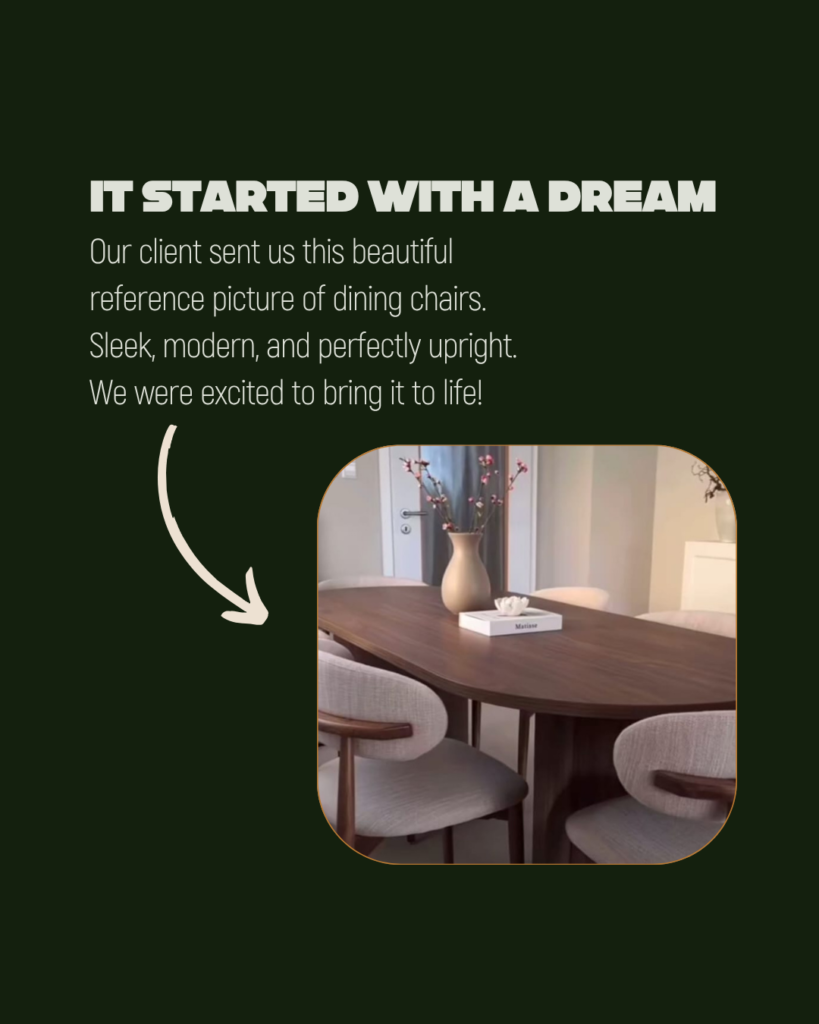
It started with a reference picture
A recent dining chair project reminded us why the process matters just as much as the final appearance.
Our client came to us with a clear vision: a sleek, modern dining chair inspired by a picture they had found online. The design had a clean silhouette, minimal proportions, and a perfectly upright backrest that looked elegant in the photo.
We understood exactly why they loved it.
The goal initially seemed straightforward – recreate the chair as accurately as possible.
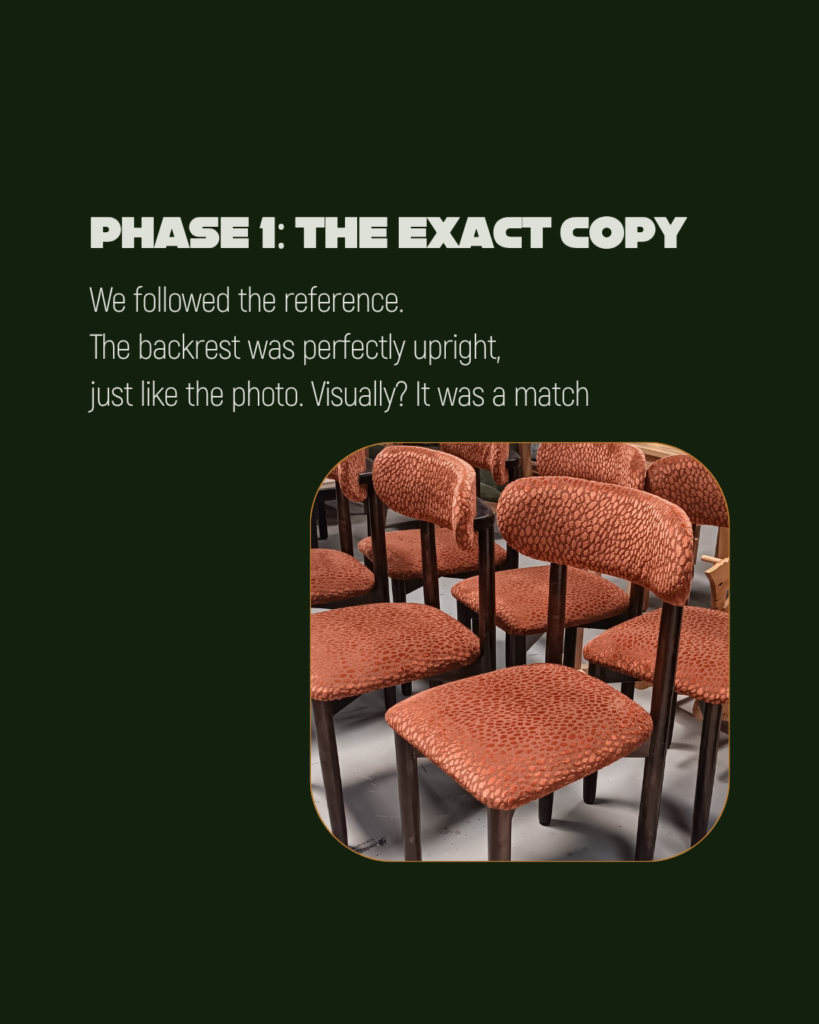
The first version was visually identical
We carefully followed the reference design. Same proportions, same visual structure.
Visually, the result matched the original picture very closely.
At first glance, everything looked successful.
But custom furniture should not be judged only by appearance.
Then came the sit-test
Before finalizing the project, we tested the chair together with the client.
That was the moment when the difference between a photograph and real-life use became obvious.
Although the chair looked refined and modern, the perfectly upright backrest felt stiff and uncomfortable during longer sitting periods. The angle did not properly support the natural posture of the body, especially for relaxed dining conversations that last beyond a quick meal.
This is something a reference picture alone cannot reveal.
Photos rarely show: ergonomics, how furniture actually feels during daily use.
Prioritizing comfort over exact replication
We worked together with the client to improve it.
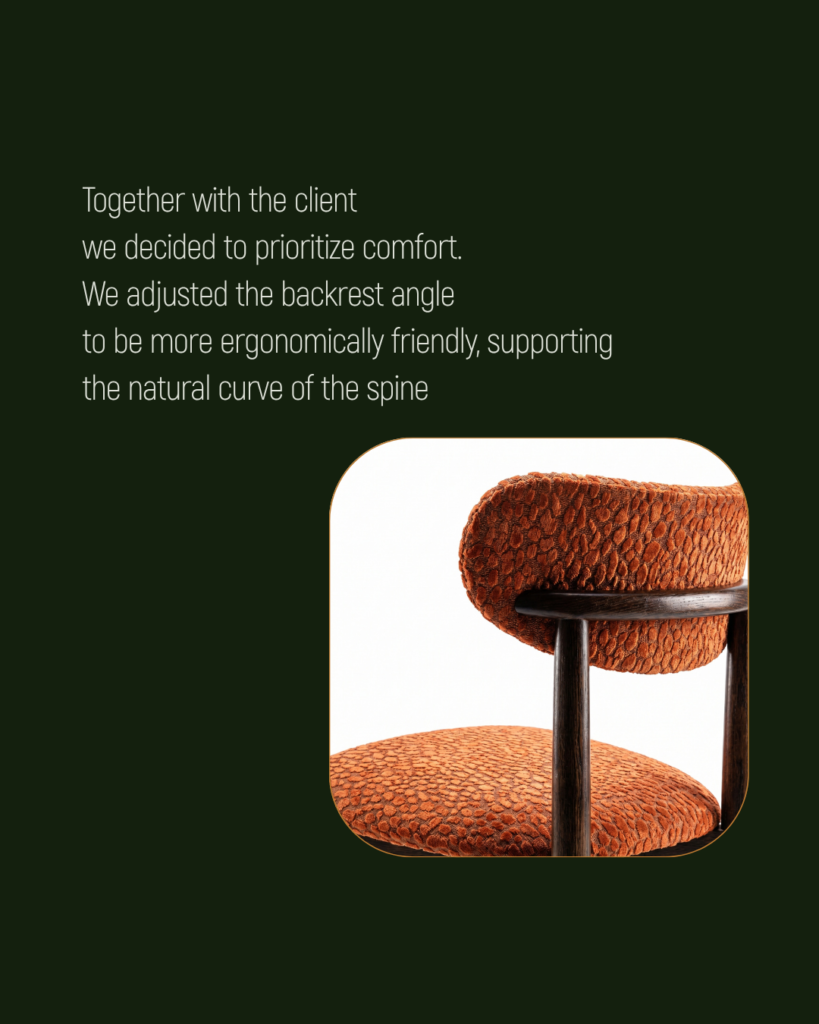
We adjusted the backrest angle slightly to create better ergonomic support while maintaining the clean visual aesthetic that attracted them to the design in the first place.
The modification was subtle visually, but significant in everyday comfort.
This collaborative process is one of the most valuable parts of custom furniture design – the ability to adapt a concept to real human use rather than treating the reference image as untouchable.
Small adjustments create better furniture
Many furniture details that seem minor in photos have a major impact in real life:
- backrest angle
- seat depth
- frame proportions
- cushion density
- sitting posture.
Even small refinements can completely change how furniture performs over the years of daily use.
Good custom furniture is not about copying a picture perfectly. It is about understanding what works, what doesn’t, and making thoughtful adjustments that improve the final result.
Design for humans, not just for cameras
The final chair still captured the clean, modern feeling of the original inspiration image. But now it also provides the comfort needed for real everyday living.
That balance matters.
When you work with a custom furniture maker, you are not simply purchasing a replica of an online image. You are creating a piece that is adapted to:
- your space
- your comfort
- your habits
- long-term use.
The goal is not perfect imitation; it is furniture that continues to feel right long after the photo is taken.
FAQ
Why can furniture look good online but feel uncomfortable in real life?
Photos do not show ergonomics, support, or how furniture feels during extended use.
Why does backrest angle matter in dining chairs?
The angle affects posture, spinal support, and long-term sitting comfort.
Can custom furniture designs be adjusted from the original reference?
Yes. Small adjustments often improve comfort, durability, and practicality while maintaining the original aesthetic.
Is exact furniture replication always a good idea?
Not necessarily. A design may need modifications to work properly for real-life use and comfort.

